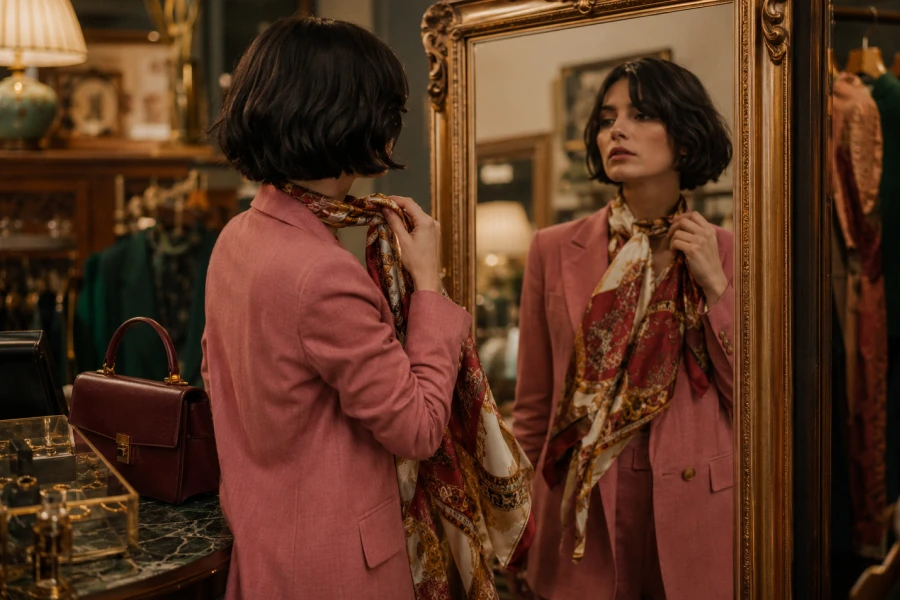
A signature look is not a costume. It is a pattern your wardrobe repeats naturally. It shows up in favored shapes, colors, fabrics, and finishing details. When that pattern feels intentional, dressing becomes calmer. You stop chasing every trend. You also stop buying pieces that never feel right. The strongest wardrobes come from self-recognition, not restriction. That is why a signature look works best when it starts with real life. It should support your routines, reflect your taste, and make your presence feel consistent. The goal is not sameness, but recognition.
Your closet already contains clues. Notice the pieces you repeat without forcing yourself. Notice the outfits that earn compliments and still feel comfortable. These choices reveal more than random preference. They show your natural direction. A personal style workbook can help organize those observations. You may discover repeated necklines, fabrics, silhouettes, or colors. Those details create a foundation. From there, better purchases become easier. Style becomes less emotional and more deliberate.
Repetition gives your outfits identity. Uniformity removes their life. The difference matters. You can repeat soft tailoring, warm neutrals, delicate accessories, or dramatic shoes without dressing the same every day. This approach creates visual continuity. It also gives your wardrobe room to breathe. A strong style rhythm feels recognizable, not predictable. Your outfits can shift between casual, polished, romantic, or bold. The repeated details simply keep everything connected. That connection makes personal style feel mature.
Trends are useful when they serve your taste. They become distracting when they replace it. Many people buy trendy pieces because the moment feels exciting. Later, those items sit untouched. A fashion identity planner helps separate attraction from alignment. Ask whether a piece works with what you already love. Ask whether it supports your lifestyle. Ask whether you would still enjoy it without social media pressure. These small questions protect your closet. They also protect your budget.
Color creates immediate recognition. Shape creates structure. Mood creates the emotional finish. Together, these elements turn random outfits into personal language. You might prefer ivory, charcoal, denim, and gold. Another person may feel best in black, burgundy, satin, and sharp lines. Neither choice is more stylish. The value comes from consistency. When your colors and shapes support each other, dressing feels smoother. You can build outfits faster. You also project a clearer impression.
Editing does not mean removing every unusual item. It means keeping the pieces that still speak clearly. Some bold items belong because they express you. Others stay only because they were expensive. This distinction changes everything. A wardrobe building system can make the process less overwhelming. Sort by fit, feeling, use, and visual alignment. Keep what strengthens your direction. Release what creates confusion. Your closet should feel edited, not emptied.
Your style will evolve. That is healthy. Work changes, bodies change, cities change, and confidence changes. A lasting visual identity has enough structure to guide decisions and enough softness to adapt. Review your wardrobe seasonally. Keep the repeated elements that still feel true. Refresh the pieces that no longer support your current life. Add new details slowly. Let experimentation happen inside a clear framework. This keeps your wardrobe alive. It also keeps getting dressed enjoyable.


Leave a comment